Child Custody Attorney
Conroe, TX & Montgomery County
Child custody is the most important issue in any family law case. Our child custody attorney Conroe TX is based downtown — steps from the Montgomery County Family Law Courts. We represent parents in the 418th, 410th, and County Court at Law No. 3. Free consultations.
Child Custody Attorney Conroe TX — Protecting Your Rights in the Montgomery County Courts
Child custody cases in Conroe and Montgomery County are decided in three local family law courts — the 418th Judicial District Court, the 410th Judicial District Court, and County Court at Law No. 3. Our child custody attorney Conroe TX office is located at 141 N. San Jacinto Street in downtown Conroe — steps from the Montgomery County Courthouse. We appear in all three courts regularly and understand how each one approaches contested custody matters, possession schedules, and modification proceedings.
In Texas, child custody is governed by two separate concepts: conservatorship — who has the legal right to make decisions for the child — and possession and access, which determines the physical schedule each parent follows. The Standard Possession Order provides a baseline, but Montgomery County courts can deviate based on the best interest of the child, each parent's circumstances, and the child's specific needs.
Our child custody attorney Conroe TX handles initial custody orders in divorce and SAPCR proceedings, contested custody modifications when circumstances change, emergency custody matters, and enforcement actions when a parent violates an existing order. Attorney Keith Phillips's background as a former CPS caseworker provides direct insight into cases involving child welfare concerns, protective orders, or agency involvement — a meaningful advantage in Montgomery County custody proceedings.
We represent parents in child custody, divorce, and all family law matters throughout Conroe and Montgomery County. Free consultations available.
- Initial custody orders — divorce & SAPCR
- Joint & sole managing conservatorship
- Standard & Expanded Possession Orders
- Contested custody hearings
- Custody modification petitions
- Emergency custody orders
- Enforcement of custody orders
- Relocation & move-away cases
- Interstate custody — UCCJEA
- Cases with CPS involvement
Child Custody Attorney Conroe TX — Conservatorship, Possession & the Best Interest Standard
Texas child custody law is built on three pillars. Understanding each — and how Montgomery County courts apply them — is where custody cases are won or lost.
Texas uses conservatorship rather than legal custody. Joint managing conservatorship — the default — means both parents share decision-making rights over education, healthcare, and major decisions, with one designated to establish the child's primary residence. Sole managing conservatorship grants one parent exclusive rights and is awarded when joint conservatorship would significantly impair the child's welfare — typically where there is a history of family violence, substance abuse, or inability to cooperate.
The possession order determines where the child lives and when each parent has time. The Standard Possession Order provides a baseline schedule — typically 1st, 3rd, and 5th weekends, Thursday evenings, alternating holidays, and extended summer time for the non-primary parent. Courts can grant the Expanded SPO, which begins possession at school dismissal rather than 6:00 PM, or entirely customized schedules based on the child's best interest and each parent's work schedules.
All Montgomery County custody decisions are governed by what is in the best interest of the child under TFC §153.002. Courts weigh each parent's stability and involvement, the child's current routine and established relationships, any history of family violence or substance abuse, the child's preferences if 12 or older, and each parent's willingness to support the child's relationship with the other parent. Building the right evidentiary record on these factors — from the very first hearing — is where our child custody attorney Conroe TX focuses from day one.
Child Custody Attorney Conroe TX — The Three Montgomery County Family Courts
All child custody cases in Conroe and Montgomery County are filed with the Montgomery County District Clerk and heard in one of three courts. Our child custody attorney Conroe TX appears in all three regularly.
Child Custody Attorney Conroe TX — Rooted in Montgomery County
Conroe is the county seat of Montgomery County — and the Birthplace of the Lone Star Flag. We are a downtown Conroe firm. Not a Houston firm that occasionally appears in Montgomery County. Our office sits steps from the Montgomery County Family Law Courts where every custody case in this county is decided.

Our office is at 141 N. San Jacinto Street in Conroe — steps from the Montgomery County Family Law Courts. We appear in the 418th, 410th, and County Court at Law No. 3 regularly. We are not a Houston firm that occasionally appears in Montgomery County. This is our home court.
Attorney Jessica Fritz has practiced family law in Montgomery County since 2008 — nearly two decades of appearing before the same courts, building the evidentiary record needed to protect parental rights and secure possession arrangements that serve the children's best interests.
Attorney Keith Phillips worked as a CPS caseworker before becoming a licensed attorney and mediator. He brings direct insight into how courts and agencies evaluate child welfare — a real advantage in contested custody cases, cases with protective concerns, or any proceeding involving agency involvement.
Keith Phillips is also a licensed mediator — he understands exactly how custody mediations unfold and how to position your case to achieve the best negotiated outcome before ever entering a courtroom. Most Montgomery County custody cases resolve through mediation. Being prepared for both outcomes is not optional.
Child custody is not a sideline. Family law is what we do — which means focused expertise in Texas conservatorship, possession schedules, geographic restrictions, modifications, and enforcement. Not a generalist handling custody between corporate transactions.
You work directly with your attorney — not a paralegal or associate who will hand your case off. Your calls are returned, your questions answered, and your case understood at every stage by the attorney who will actually appear in court on your behalf.
Child Custody Attorney Conroe TX — Standard vs. Expanded Possession Order
Texas law gives the noncustodial parent two possession schedule options. Most orders default to the Standard Possession Order — but the Expanded SPO gives significantly more time and must be affirmatively elected in writing. This is one of the most frequently missed details in Montgomery County custody cases.
The default possession schedule when parents live within 100 miles of each other. Transfers occur at 6:00 PM on the first day of possession.
- 1st, 3rd, and 5th weekends — Friday 6:00 PM to Sunday 6:00 PM
- Thursday evenings during the school year — 6:00 PM to 8:00 PM
- Alternating holidays including Thanksgiving, Christmas, spring break
- 30 days of summer possession
- Father's Day / Mother's Day weekends
The Expanded SPO gives the noncustodial parent significantly more time — transfers begin at school dismissal, not 6:00 PM. Must be elected in writing.
- Weekend possession begins at school dismissal Friday — not 6:00 PM
- Weekend possession ends when school resumes Monday morning
- Thursday possession begins at school dismissal — ends at school resumption Friday
- Summer possession may extend to 42 days
- Must be elected in writing at or within 30 days of the final order
The Expanded SPO does not apply automatically. The noncustodial parent must make a written election at the time of the final order or within 30 days. Missing this window means defaulting to the Standard SPO permanently — it cannot be applied retroactively.
- Election must be in writing
- Must be made at or within 30 days of the final order
- Applies prospectively — not retroactively
- Must be addressed in mediation or at final trial
Montgomery County family courts commonly restrict the child's primary residence to Montgomery County and contiguous counties — Harris, Walker, San Jacinto, Waller, and Grimes. Moving outside this area without court approval or the other parent's written consent is a violation and can result in:
- Contempt of court proceedings
- Emergency custody hearing
- Modification of primary custody
- Attorney's fee award to the complying parent
Child Custody Attorney Conroe TX — Modifications & Enforcement
Texas allows custody modifications when there has been a material and substantial change in circumstances since the last order. Common qualifying changes include:
- A parent relocating outside the geographic restriction
- A significant change in either parent's work schedule or income
- A new safety concern — domestic violence, substance abuse, neglect
- Changes in the child's school, healthcare, or developmental needs
- Documented parental alienation
- A parent's remarriage that materially affects the child's environment
Generally, Montgomery County courts will not consider a modification filed within one year of the original order — unless the child's present environment presents a danger, or the primary parent has voluntarily relinquished care for at least six months. When both parents agree, a modification can proceed at any time.
When a parent violates a custody order — denying possession time, failing to return a child, relocating without notice, or interfering with the other parent's rights — Texas courts have strong enforcement tools:
- Contempt of court — civil or criminal, with fines and possible incarceration
- Make-up possession time awarded to the complying parent
- Attorney's fees awarded against the violating parent
- In serious or repeated cases — modification of primary custody
- Emergency custody orders when the child's safety is at risk
Document every violation — dates, times, what happened, and any communications. Contact our child custody attorney Conroe TX promptly. Enforcement actions move faster when the evidence is fresh and the pattern is established early.
Speak With a Child Custody Attorney Conroe TX
Our child custody attorney Conroe TX is based downtown — steps from the Montgomery County Family Law Courts. Free consultations available for all custody matters in the 418th, 410th, and County Court at Law No. 3.
(713) 352-6900Child Custody Attorney Conroe TX — FAQ
Child Custody Basics — Conroe TX
How Texas custody law works and what courts consider in Montgomery County.
Texas uses conservatorship rather than legal custody. Conservatorship covers the right to make decisions about a child's education, healthcare, and welfare. Possession and access covers where the child lives and when each parent has time.
Joint managing conservatorship (JMC) — the default in Texas — means both parents share decision-making rights, with one designated to establish the child's primary residence. Sole managing conservatorship (SMC) grants one parent exclusive decision-making rights and is awarded where joint conservatorship would significantly impair the child's welfare.
Montgomery County family courts apply the best interest of the child standard under TFC §153.002. Courts evaluate:
- Each parent's day-to-day involvement in the child's life
- Stability and quality of each home environment
- The child's existing relationships with siblings and extended family
- Each parent's physical and mental health
- Any history of family violence, substance abuse, or neglect
- Each parent's willingness to support the child's relationship with the other parent
- For children 12 and older — the child's expressed preference
Texas law is gender-neutral. Fathers and mothers are evaluated on equal footing.
Yes. Texas law explicitly prohibits courts from applying any gender preference in custody decisions. A father can be designated as the parent with the right to establish primary residence if the evidence supports that arrangement. Outcomes are based entirely on each parent's involvement, stability, and ability to meet the child's needs — not on gender.
Conroe Courts — Child Custody Attorney Conroe TX
Where Conroe and Montgomery County child custody cases are filed and decided.
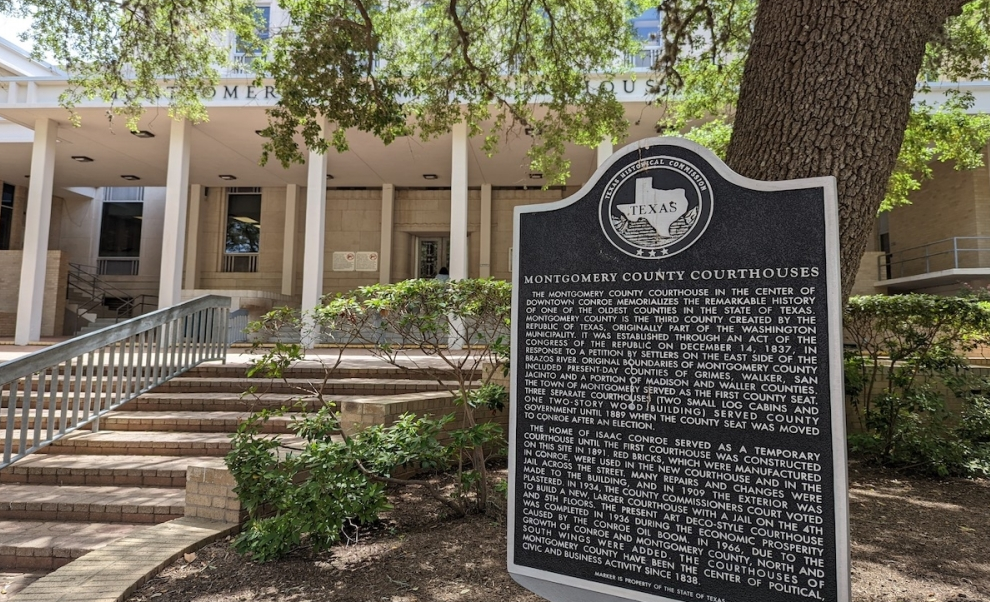
Child custody cases in Conroe and Montgomery County are heard in three courts located at the Montgomery County Courthouse:
Cases are randomly assigned at filing — you do not choose your court. Our child custody attorney Conroe TX appears regularly in all three and understands the local rules, standing orders, and approach to contested custody matters specific to each courtroom.
Yes — meaningfully. Each of the three Montgomery County family courts has its own local rules, standing orders, scheduling preferences, and approach to temporary orders and contested hearings. Knowing those distinctions — and preparing accordingly — is a concrete advantage that only comes from appearing in these courts regularly. It affects strategy, timeline, and ultimately outcomes in your case.
Possession Schedule — Child Custody Attorney Conroe TX
Standard vs. Expanded SPO — and why the election timing matters in Montgomery County.
The Expanded Standard Possession Order (ESPO) under TFC §153.317 gives the noncustodial parent significantly more time. Weekend possession begins at school dismissal Friday rather than 6:00 PM and ends when school resumes Monday morning. Thursday possession begins at school dismissal. Summer may extend to 42 days.
The Expanded SPO must be elected in writing at or within 30 days of the final order under TFC §153.3171 — it does not apply automatically. Missing that window means defaulting to the Standard SPO permanently. Our child custody attorney Conroe TX addresses this election proactively at the time of your final order.
A child who is 12 years of age or older may file a written statement with the court expressing a preference about which parent should establish primary residence. The court must consider this preference but is not required to follow it — the best interest standard governs. A younger child's preference may also be considered if the court finds the child sufficiently mature.
Custody Modifications — Child Custody Attorney Conroe TX
When and how Montgomery County custody orders can be changed.
Texas allows custody modifications when there has been a material and substantial change in circumstances since the last order and modification is in the best interest of the child. Generally courts will not consider a modification filed within one year of the original order unless:
- The child's present environment presents immediate danger to physical or emotional health
- The primary conservator has voluntarily relinquished primary care for at least six months
When both parents agree, a modification can proceed at any time regardless of when the original order was entered.
Enforcement — Child Custody Attorney Conroe TX
What happens when the other parent violates a Montgomery County custody order.
Document every violation — dates, times, what happened, and any communications. Then contact our child custody attorney Conroe TX promptly. Texas courts can:
- Hold the violating parent in contempt — with fines and possible incarceration
- Award make-up possession time to the complying parent
- Require the violating parent to pay your attorney's fees
- In serious or repeated cases — modify primary custody to the complying parent
Acting quickly and with documented evidence gives you the strongest position in enforcement proceedings in Montgomery County.
Relocation — Child Custody Attorney Conroe TX
Moving with a child after a Montgomery County custody order.
Most Montgomery County custody orders include a geographic restriction limiting the primary parent's residence to Montgomery County and contiguous counties — Harris, Walker, San Jacinto, Waller, and Grimes. Relocating outside that area without court approval or the other parent's written consent violates the order and can result in:
- Contempt of court proceedings
- Emergency custody hearing
- Modification of primary custody
- Attorney's fee award against you
If you need to relocate — or if the other parent is attempting to move your child — contact our child custody attorney Conroe TX before any action is taken.
Meet the Attorneys at Fritz & Phillips

As a mother of many teenagers, Jessica understands firsthand the importance of family stability and what is truly at stake in the cases she handles. She approaches every matter with a focus on clear communication, practical strategy, and results that reflect the realities of her clients' lives. She is the co-founder of 2500Divorce.com, a flat-fee uncontested divorce service serving Texas families.

Keith became a licensed mediator in 2020, and that perspective shapes how he approaches every case — focused on practical, efficient resolution while fully prepared to litigate when necessary. He is the co-founder of 2500Divorce.com and a father of five.

Family Law
Family Law Overview Divorce Child Custody Child Support Property Division Spousal Maintenance Prenuptial Agreements Grandparents' Rights Adoption PaternityPersonal Injury
Personal Injury Overview Car Accidents 18-Wheeler Accidents Motorcycle Accidents Slip & Fall Workplace Injuries Wrongful Death Catastrophic Injuries Dog BitesOur Firm
About Us FAQ Blog Contact Us 2500Divorce.com ↗Montgomery County
Conroe The Woodlands Spring Shenandoah / Oak Ridge North Magnolia / Montgomery Willis / New CaneyHarris County
Houston / Harris County Memorial / Energy Corridor Galleria / Uptown / River Oaks Kingwood / Atascocita Humble Cypress Tomball North Houston / Spring Branch Pasadena / Deer Park / BaytownGreater Houston
Sugar Land / Fort Bend County Katy / Fulshear Richmond / Rosenberg Missouri City / Stafford Pearland / Brazoria County Friendswood / Clear Lake Angleton / Lake Jackson Waller County / HempsteadDivorce
Divorce — Conroe Divorce — HoustonChild Custody
Custody — Conroe Custody — HoustonCar Accidents
Car Accident — Conroe Car Accident — HoustonUncontested Divorce
2500Divorce.com Flat-Fee Pricing What We Do Divorce FAQOffice Hours
Mon–Thu: 8:30 AM – 5:30 PM Fri: 8:30 AM – 12:00 PM Sat–Sun: By AppointmentCopyright © Fritz and Phillips, PC · All Rights Reserved
Attorney advertising. Fritz and Phillips, PC is a Texas law firm. The information on this website is for general informational purposes only and does not constitute legal advice or establish an attorney-client relationship. Prior results do not guarantee similar outcomes. Jessica Fritz (TX Bar 2008) and Keith Phillips (TX Bar 2016) are the attorneys responsible for this content.